Environment & Climate Resilience
Restoring ecosystems while strengthening community resilience
Rural livelihoods are closely connected with land, water, forests and biodiversity. Climate change, soil degradation, water stress, salinity, deforestation and extreme weather events directly affect food security, income and community wellbeing.
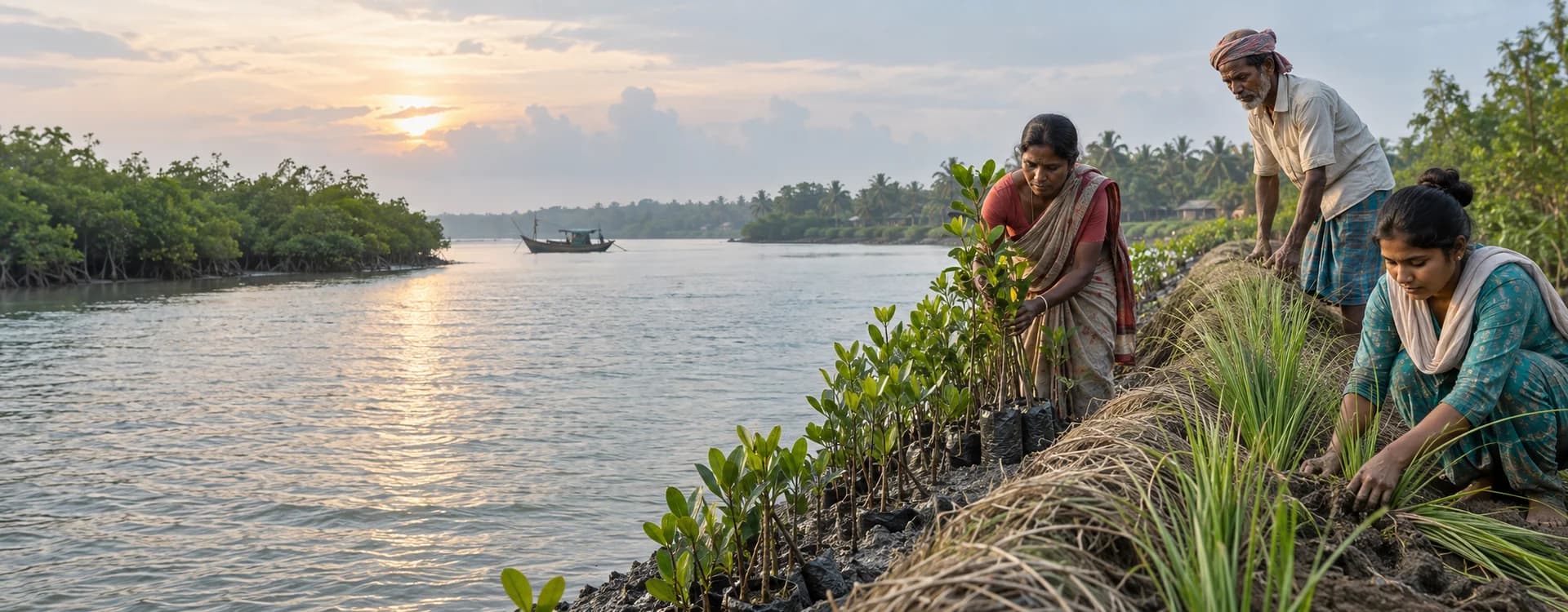
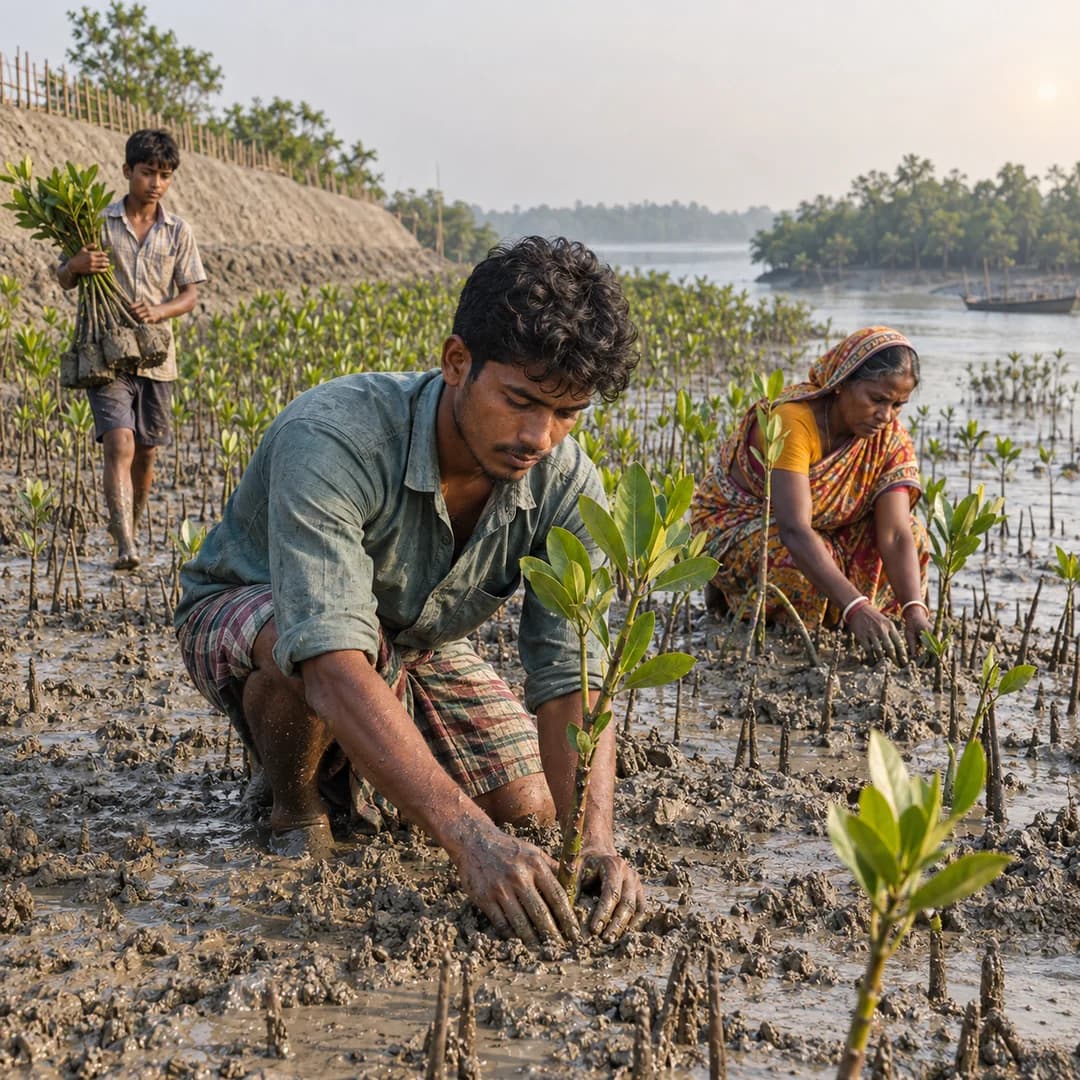
TSRD works with communities to restore natural resources, protect vulnerable ecosystems and develop locally appropriate responses to environmental and climate-related risks. Environmental restoration is linked with sustainable livelihoods so that conservation also contributes to community security.
Particular attention is given to ecologically sensitive areas, including the Sundarbans and other climate-vulnerable regions of West Bengal and Jharkhand.
Key Focus Areas
- Mangrove and community plantation
- Soil and water conservation
- Watershed and degraded-land restoration
- Climate-resilient agriculture
- Biodiversity and habitat protection
- Community forestry
- Coastal and riverine ecosystem restoration
- Environmental awareness
- Disaster preparedness and local resilience
Our Approach
TSRD combines scientific knowledge, local experience and community participation. Residents are involved in planning, plantation, protection, monitoring and the sustainable use of restored natural resources.